

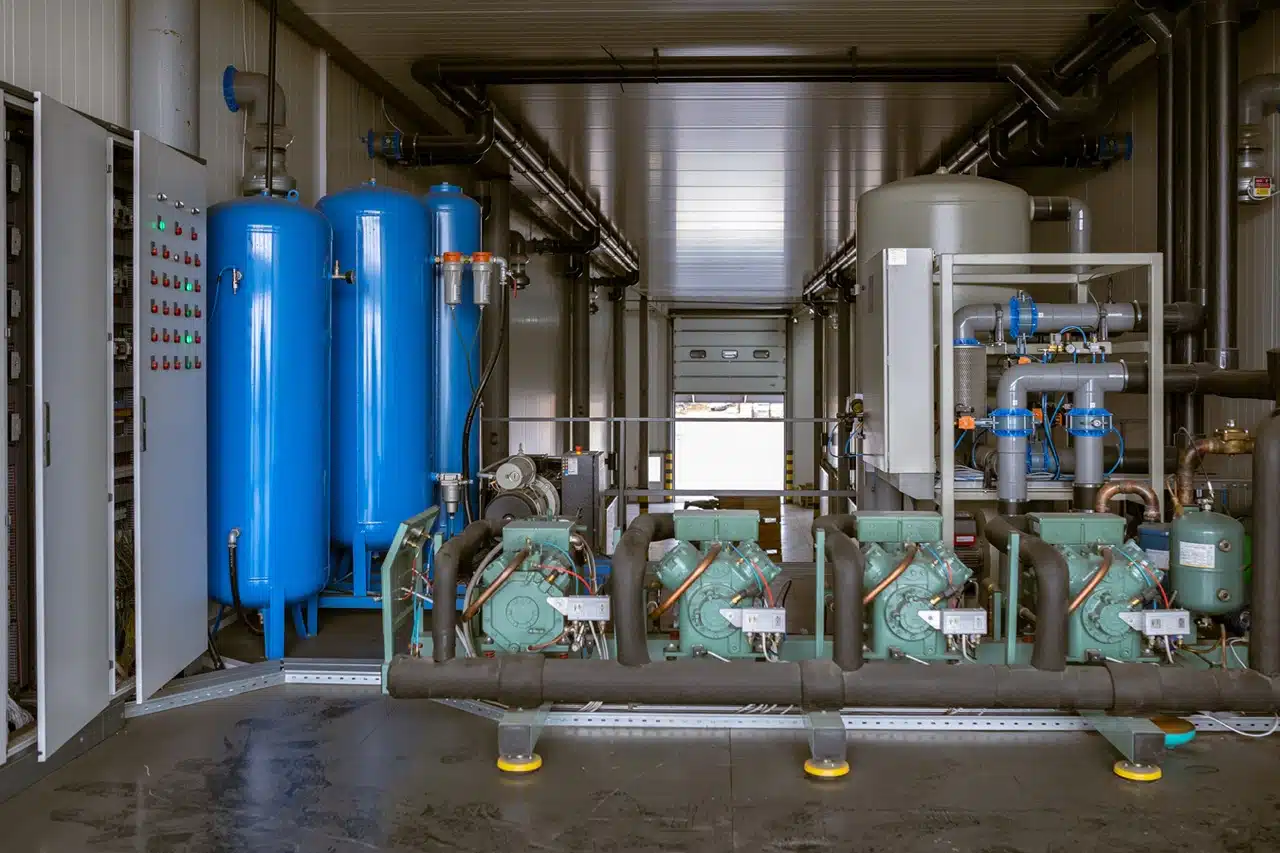
If someone asked how a nitrogen generator works today, the short answer is: it compresses ambient air, strips out oxygen and other gases, and delivers a steady stream of high‑purity nitrogen on demand. The longer answer, especially in 2025, includes advances in sensors, AI-assisted controls, and smarter purification trains that make systems more efficient and reliable than even a few years ago. This overview breaks down the core mechanics from compression to separation, compares PSA and membrane technologies, and highlights the filtration, automation, and maintenance practices that keep purity and flow rock‑solid. Whether a facility runs food packaging, laser cutting, pharma, or electronics, understanding these basics helps them choose and operate a system with confidence. Brands like PneuTech have leaned into these innovations, but the fundamentals apply across modern generators.
Step-by-step explanation of air compression and separation processes
At the heart of every nitrogen generator is a simple idea: start with air (about 78% nitrogen, 21% oxygen, plus traces), then separate nitrogen and deliver it at the purity and pressure the process needs.
1) Intake and primary compression
Ambient air enters through an intake filter, then feeds a compressor, often a rotary screw unit for continuous duty. The compressor raises pressure to a typical range of 7–12 bar (100–175 psig). Heat is a byproduct, so aftercoolers and moisture separators knock out condensate before it can foul downstream components.
2) Air cooling and bulk moisture removal
Compressed air leaves the compressor hot and humid. An aftercooler drops the temperature, condensing water. A moisture separator and automatic drain purge liquid. This step protects the fine filtration and separation media that follow.
3) Drying and fine filtration pre-treatment
Most systems use a refrigerated dryer for general-purpose drying or a desiccant dryer for very low dew points (down to −40 °C or lower). Coalescing and particulate filters remove oil aerosols and fine solids: activated carbon filters adsorb oil vapors and odors. Clean, dry air is the prerequisite for stable nitrogen purity, whichever separation method is used.
4) Gas separation: PSA or membrane
Separation happens either by Pressure Swing Adsorption (PSA) or via hollow-fiber membrane modules.
- PSA uses carbon molecular sieve (CMS) that preferentially adsorbs oxygen, moisture, CO2, and some argon at elevated pressure, allowing nitrogen to pass.
- Membranes exploit differential permeation: oxygen and water vapor diffuse through polymer fibers faster than nitrogen, enriching the retentate stream in nitrogen.
5) Pressure management and delivery
After separation, nitrogen passes through a buffer tank. Pressure regulators and mass flow controllers stabilize delivery. Inline analyzers verify purity (commonly specified between 95% and 99.999%). The nitrogen is then routed to point-of-use or storage, while waste gas (oxygen-rich permeate from membranes or desorbed gases from PSA) is safely vented.
6) Feedback and quality assurance
Modern systems constantly read oxygen concentration, temperature, pressure, and dew point. These values feed the control logic to keep purity and flow on-spec, even as plant demand fluctuates. This continuous loop is where 2025-era controls really shine.
Comparing PSA and membrane technologies in modern generators
Both PSA and membrane nitrogen generators deliver on-site nitrogen, but each shines in different use cases. The right choice depends on required purity, flow rate, footprint, and lifecycle cost. For readers seeking a deeper technical understanding of system design and separation mechanisms, How Nitrogen Generator Works explains the principles behind PSA and membrane operations, helping engineers align purity requirements with practical performance.
Purity and performance
- PSA: Best for high purity. Practical ranges from 95% up to 99.999% (10 ppm O2) with optimized CMS beds and multi-column designs. Excellent for laser cutting, electronics, pharma, and any spec-sensitive process.
- Membrane: Typically 95–99.5% purity, with 99.9% possible in select modules at reduced flow. Ideal for inerting, tire inflation, oil & gas blanketing, and food packaging where ultra-high purity isn’t necessary.
Efficiency and operating cost
- PSA: Energy use scales with compressor power and valve sequencing. High-purity PSA (≥99.9%) is usually more energy-efficient than membranes at the same purity. Media life often exceeds 10 years when air quality is well-managed.
- Membrane: Very simple mechanically. For mid-purity needs, membranes can be very cost-effective. But, as purity targets rise, usable flow drops and specific energy increases.
Footprint, complexity, and uptime
- PSA: Larger footprint due to twin (or multi) adsorption towers, valves, and buffer tanks. More moving parts but still robust. Easy to scale with modular skids.
- Membrane: Compact, lightweight, minimal moving parts. Warm-up time is short: start-stop cycling is gentle.
Environmental and use-case notes
- PSA handles wide ambient ranges well and tolerates fluctuating demand with buffer capacity.
- Membranes are attractive offshore and in remote sites for their simplicity, particularly where maintenance windows are tight.
In practice, many facilities evaluate total cost of ownership over 5–10 years. For high purity, PSA usually wins. For mid-purity with low maintenance, membranes can be the simpler, cheaper path. Providers like PneuTech frequently offer both, guiding teams via application testing rather than one-size-fits-all advice.
Key filtration components and purification stages
Consistent nitrogen quality hinges on the air treatment train. Even the best PSA beds or membrane fibers can’t compensate for oil, water, and particulates upstream. A typical 2025-ready purification stack looks like this:
1) Intake filtration
- Weather hood and coarse filter: Keeps insects, dust, and debris out of the compressor. Simple, but it prevents a world of pain.
2) Aftercooler and moisture separator
- Plate or shell-and-tube cooler drops discharge air temperature. Centrifugal separator removes bulk condensate. An automatic drain prevents re-entrainment.
3) Dryers
- Refrigerated dryer: Economical, dew points around +3 °C. Great for general manufacturing and membrane systems aiming at 95–98% purity.
- Desiccant dryer (heatless or heated): Achieves −20 to −70 °C dew points or lower. Preferred for PSA units driving ≥99.9% purity, laser cutting, and electronics.
4) Filtration stages
- Coalescing filter (0.01–0.1 μm): Traps oil aerosols and submicron particles.
- Particulate filter (1 μm or finer): Downstream protection, especially after desiccant beds which can shed dust.
- Activated carbon filter: Adsorbs oil vapor and hydrocarbons that might poison CMS or degrade membranes.
5) Oxygen analyzer, dew point monitor, and safety valves
- Inline oxygen sensor (electrochemical or zirconia) validates purity in real time.
- Dew point sensor ensures moisture stays below the threshold that might damage CMS or corrode downstream equipment.
- Relief and check valves protect vessels and prevent backflow.
6) Final polishing and storage
- For ultra-high purity PSA, a final particulate filter and sometimes a catalytic stage (if specified) polish the stream before a nitrogen receiver tank. The tank smooths demand spikes, allowing the generator to run efficiently.
Well-designed systems balance pressure drop against filtration performance. The rule of thumb: invest in clean air up front: it’s cheaper than fighting purity drift or replacing media later.
Automation, sensors, and AI-assisted controls in 2025 systems
Controls have become the quiet superpower of modern nitrogen generators. In 2025, even mid-range units include intelligent sequencing, continuous analytics, and cloud visibility.
Smarter PSA sequencing
- Adaptive cycle timing: Algorithms adjust adsorption and desorption durations to maintain purity with changing flow and temperature, extending CMS life.
- Pressure equalization optimization: Valves time equalization to minimize energy loss between towers.
Real-time quality assurance
- Redundant oxygen sensors: Cross-check readings to avoid nuisance trips: auto-calibration routines compensate for sensor aging.
- Dew point, pressure, and temperature arrays: Data is fused to detect anomalies (e.g., a rising dew point alongside stable pressure suggests dryer issues rather than leaks).
AI-assisted diagnostics and optimization
- Predictive maintenance: Machine learning models flag developing issues, valve response lag, compressor bearing wear, membrane performance decay, before they hit spec.
- Load forecasting: Linking to plant SCADA or MES lets the generator pre‑empt demand spikes, charging buffers when power is cheapest.
Connectivity and cybersecurity
- Remote dashboards (web/mobile) visualize purity, flow, and energy KPIs.
- Secure protocols and role-based access protect valve actuation and setpoints. Vendors like PneuTech now ship with encrypted gateways, offline modes, and audit logs for regulated industries.
These features don’t just add convenience: they protect product quality and reduce energy per Nm³ of nitrogen. A small tweak to PSA cycle timing, for instance, can lower kWh/Nm³ notably over a year.