

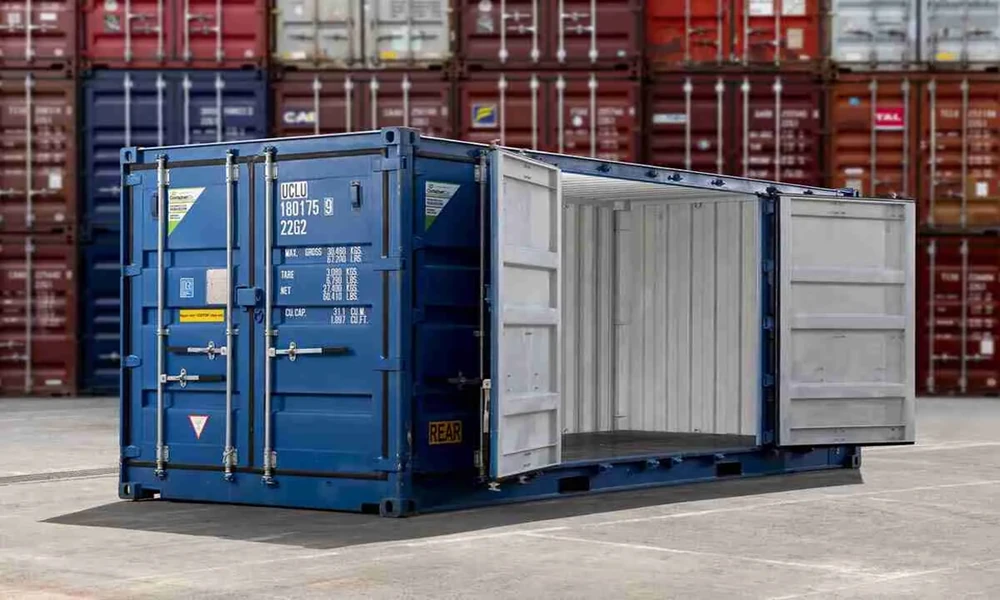
Moving cargo across international borders has never been simpler in operational terms, and the intermodal container is the principal reason why. Before containerisation, a shipper who wanted to send goods from Singapore to Rotterdam had to negotiate with a shipping agent, arrange for the goods to be packed into crates or bales, deliver them to the port, watch as stevedores loaded each piece individually into the ship’s hold, then reverse the process at the destination. Today, the same shipper books a container, stuffs their cargo at their warehouse, delivers the sealed box to the port, and tracks it online across the full journey.
This guide explains how the intermodal container works in the context of global freight and cargo movement, covering the key specifications, operational conventions, and Singapore-specific logistics considerations that importers, exporters, and logistics professionals need to understand.
Infinex Containers provides intermodal containers to Singapore customers across the full range of freight and logistics applications.
Container Specifications That Matter for Cargo Planning
Three specifications drive most cargo planning decisions for intermodal containers: the internal dimensions, the payload capacity, and the door opening dimensions.
Internal dimensions determine whether the cargo physically fits inside the container. A 20-foot general purpose container has an internal length of approximately 5.9 metres, an internal width of approximately 2.35 metres, and an internal height of approximately 2.39 metres. A 40-foot high cube container extends the length to approximately 12.03 metres and the height to approximately 2.70 metres, creating significantly more usable internal volume.
Payload capacity determines whether the cargo is within the container’s maximum gross weight limit. The tare weight of the container itself must be subtracted from the maximum gross weight to determine the available payload. A 20-foot GP container has a maximum gross weight of 24 tonnes with a tare of approximately 2.2 tonnes, leaving a payload capacity of approximately 21.8 tonnes.
Intermodal container specifications from Infinex align with ISO and CSC standards, with each container certified to its rated maximum gross weight.
How Freight is Consolidated and Deconsolidated
Not every shipper generates enough cargo volume to fill an entire container. For these shippers, less-than-container-load (LCL) consolidation services aggregate cargo from multiple shippers at a Container Freight Station (CFS), where the combined shipment fills a container for ocean transport. At the destination port, the container is deconsolidated at the CFS and each shipper’s cargo is collected separately.
Full container load (FCL) shipments, where a single shipper fills an entire container, offer faster transit times and lower handling risk because the cargo is loaded at the shipper’s premises and not touched again until it reaches the consignee’s premises.
The choice between LCL and FCL depends on the cargo volume and the relative cost of the two options, which varies with the specific trade lane and prevailing freight rates.
Documentation for International Container Freight
Moving a container internationally requires a set of documents that serve the customs, insurance, and commercial functions of the shipment. The Bill of Lading is the shipping line’s receipt for the cargo and the document that represents title to the goods during transit. The packing list describes the contents of the container. The commercial invoice establishes the value of the goods for customs purposes. The Certificate of Origin identifies where the goods were manufactured, which affects the customs duty applicable at the destination.
Errors in these documents can cause container holds at customs, additional inspection, and delays that affect the cargo’s delivery schedule and the shipper’s commercial commitments.
Container Tracking and Visibility
Modern container shipping offers end-to-end tracking visibility through the shipping lines’ online portals and third-party tracking platforms. The container number, a standard format of four letters followed by seven digits, identifies the specific container and can be used to track its position and status from port of loading through ocean transit to port of discharge and beyond.
For time-sensitive cargo, this tracking visibility is essential for the commercial planning that depends on knowing when the goods will arrive.
For Singapore importers, exporters, and logistics operators looking for an intermodal container guide and supply service for global freight and cargo movement, Infinex Containers provides the intermodal container supply and expertise that navigating the global container freight system requires.